


In the past decade, Artificial Intelligence (AI) has emerged as a transformative force across various industries—and education is no exception. With the growing integration of AI tools in schools, colleges, and e-learning platforms, the future of education is becoming smarter, more personalized, and highly accessible.
AI in Education: What Is It?
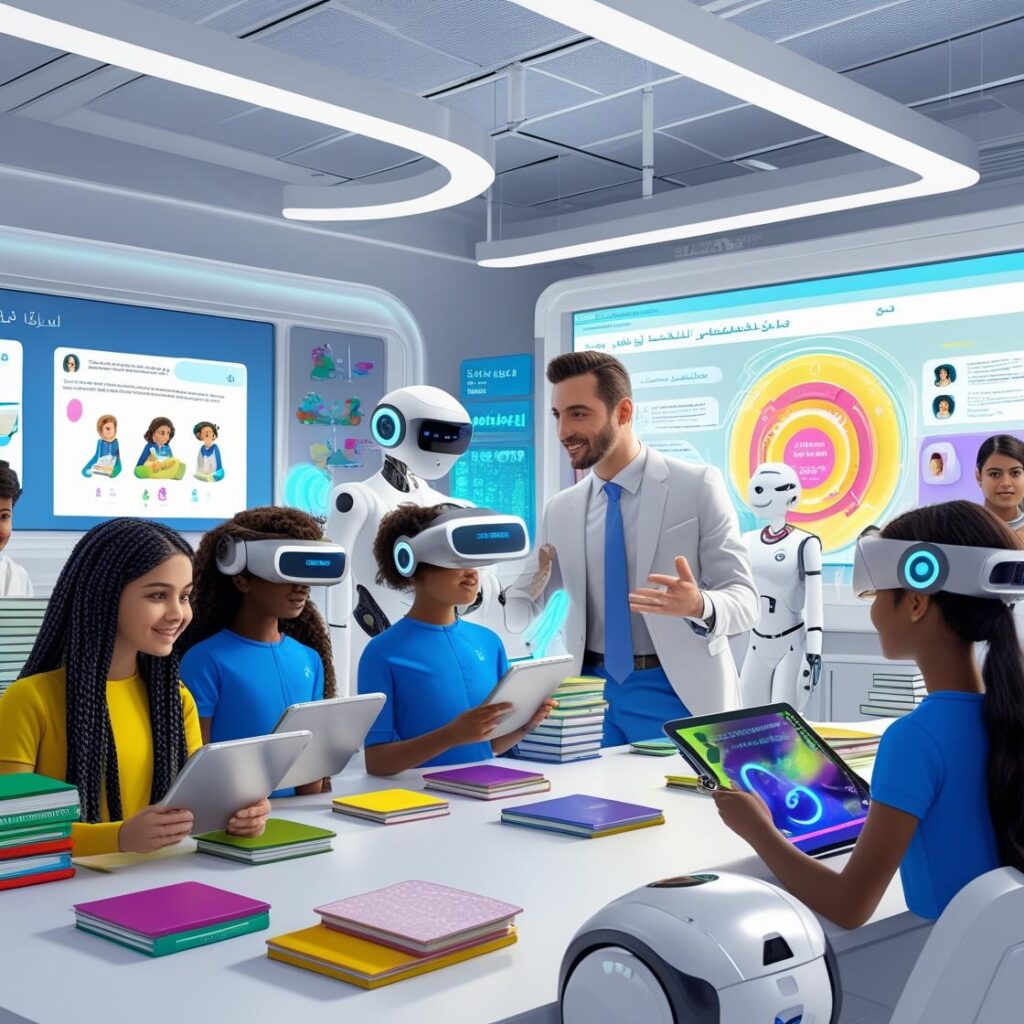
The term artificial intelligence (AI) in education refers to the application of AI technologies, including machine learning, natural language processing, and predictive analytics, to improve learning outcomes, expedite administrative work, and develop flexible learning environments.
AI is revolutionizing both teaching and learning, from automated grading systems and AI tutors to intelligent content creation and personalized learning platforms.
Top Benefits of AI in Education
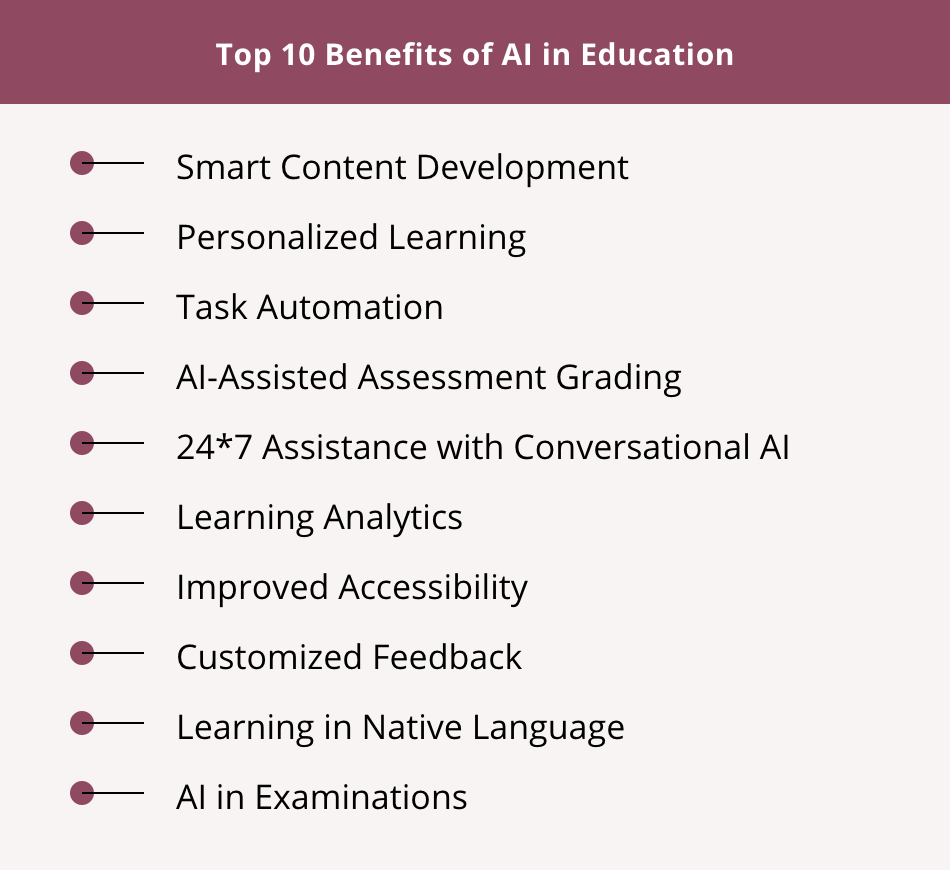
1. Personalized Learning
Personalized learning is one of the most significant benefits of AI in education, as it allows lessons to be tailored to each student’s individual strengths, weaknesses, and learning pace. AI in education can analyze performance data to identify gaps in understanding, suggest targeted exercises, and adapt content in real time, ensuring that every student receives the support they need. By enabling a customized learning experience, AI in education enhances engagement, improves outcomes, and fosters a more effective and student-centered approach to education.
2. 24/7 Learning Support
One of the key benefits of AI in education is providing 24/7 learning support, allowing students to access guidance, resources, and feedback at any time. AI-powered tools, such as virtual tutors and chatbots, ensure that learners can get instant help outside the classroom, addressing doubts and reinforcing concepts whenever needed. By offering continuous support, AI in education enhances learning flexibility, promotes self-paced study, and ensures that students remain engaged and confident in their educational journey.
3. Automated Administrative Tasks
AI in education offers significant benefits by automating administrative tasks, allowing educators to focus more on teaching and mentoring rather than paperwork. Tasks such as grading assignments, managing attendance, scheduling, and tracking student progress can be efficiently handled by AI systems, reducing human error and saving valuable time. By streamlining these processes, AI in education enhances operational efficiency, supports better decision-making, and creates a more organized and productive learning environment for both teachers and students
4. Intelligent Tutoring Systems
Intelligent Tutoring Systems are a powerful example of the benefits of AI in education, providing personalized guidance and real-time feedback to students. These AI-driven systems can analyze individual learning patterns, identify knowledge gaps, and adapt lessons to suit each student’s needs. By offering tailored support similar to one-on-one tutoring, AI in education helps improve comprehension, engagement, and academic performance. Such systems make learning more interactive, effective, and accessible, ensuring that students receive the guidance they need at every step of their educational journey.
5. Real-Time Feedback
Real-time feedback is one of the most valuable benefits of AI in education, allowing students to understand their mistakes and improve instantly. AI-powered systems can evaluate assignments, quizzes, and interactive exercises on the spot, providing immediate insights and suggestions for improvement. By offering timely feedback, AI in education helps students stay engaged, correct misconceptions quickly, and enhance their learning outcomes. This continuous guidance ensures a more efficient and personalized educational experience, empowering learners to achieve their full potential.
6. Enhanced Accessibility
Enhanced accessibility is a major benefit of AI in education, as it enables students with diverse learning needs and abilities to access quality education. AI-powered tools can provide text-to-speech, speech-to-text, personalized learning aids, and adaptive content, ensuring that learners with disabilities or language barriers are not left behind. By making educational resources more inclusive, AI in education helps bridge gaps, promote equal opportunities, and create a supportive learning environment where every student can thrive and succeed.
7. Data-Driven Insights
Data-driven insights are a key benefit of AI in education, as they allow educators to make informed decisions based on student performance, learning patterns, and engagement metrics. AI systems can analyze vast amounts of data to identify strengths, weaknesses, and trends, helping teachers tailor instruction and interventions effectively. By leveraging these insights, AI in education enhances personalized learning, improves academic outcomes, and supports strategic planning, ensuring that both students and educators benefit from a more efficient and evidence-based approach to teaching and learning.
8. Improved Engagement
Improved engagement is one of the most notable benefits of AI in education, as AI-powered tools make learning more interactive, personalized, and motivating. By adapting content to individual student interests, providing gamified experiences, and offering instant feedback, AI in education helps sustain attention and encourages active participation. This enhanced engagement not only makes learning enjoyable but also promotes better understanding and retention of concepts, ensuring that students remain invested in their educational journey.
9. Global Learning Opportunities
Global learning opportunities are a major benefit of AI in education, as AI-powered platforms allow students to access courses, resources, and expertise from around the world. With personalized learning paths, real-time translation, and collaborative tools, AI in education connects learners across borders, enabling them to gain diverse perspectives and expand their knowledge beyond local curricula. By fostering global connectivity, AI in education promotes cross-cultural understanding, equal access to quality education, and the development of skills needed for success in a rapidly evolving world.
10. Preparation for Future Jobs
AI in education plays a crucial role in preparing students for future jobs by equipping them with relevant skills and knowledge needed in a technology-driven world. AI-powered learning platforms can provide personalized skill development, career guidance, and practical simulations that align with industry demands. By integrating coding, problem-solving, data analysis, and critical thinking into learning pathways, AI in education helps students gain the competencies required for emerging careers, ensuring they are better prepared to succeed in the workforce of tomorrow.
⚠️ Challenges and Ethical Concerns of AI in Education
1. Data Privacy & Security
Data privacy and security remain significant challenges in AI in education. With AI systems analyzing large volumes of student data, there is a risk of breaches, misuse, and unauthorized access. Ethical concerns emerge when sensitive information is used to influence grading, learning paths, or performance evaluations. Protecting student data through strict security protocols and clear ethical guidelines is essential for responsible implementation of AI in education.
AI systems rely on large amounts of student data to function effectively. This raises serious concerns about:
- Data collection without consent
- Risk of data breaches
- Misuse of sensitive personal information
2. Bias in Algorithms
Bias in algorithms is a critical challenge in AI in education, as AI systems may unintentionally favor certain groups of students over others. These biases can arise from skewed training data, limited representation, or flawed model design, leading to unfair assessments, recommendations, or learning opportunities. Ethical concerns emerge when such biases affect academic outcomes, reinforce stereotypes, or disadvantage marginalized students. Addressing algorithmic bias requires careful design, regular audits, and inclusive datasets to ensure that AI in education promotes fairness and equitable learning for all students.
AI systems may unintentionally carry biases in learning recommendations or grading if they’re trained on non-diverse or flawed data.
3. Overdependence on Technology
Overdependence on technology is a growing concern in AI in education, as students and educators may rely excessively on automated systems for learning, grading, and decision-making. This reliance can reduce critical thinking, creativity, and personal interaction, which are essential for holistic education. Ethical challenges also arise when AI-driven tools replace human judgment in evaluating student performance or learning needs. Balancing technology use with traditional teaching methods is crucial to ensure that AI in education enhances learning rather than undermining essential educational skills.
Relying too heavily on AI may reduce the importance of human interaction, emotional intelligence, and critical thinking in education.
4. Digital Divide
The digital divide is a significant challenge in AI in education, as unequal access to technology and the internet can prevent many students from benefiting fully from AI-driven learning tools. Students in underprivileged or rural areas may face limited connectivity, outdated devices, or lack of digital literacy, creating disparities in educational opportunities. Addressing this ethical concern is essential to ensure that AI in education promotes inclusive learning and does not widen existing gaps in access and achievement.
5. Lack of Transparency
Lack of transparency is a significant challenge in AI in education, as many AI systems operate as ‘black boxes’ with limited clarity on how decisions are made. This opacity can create ethical concerns, particularly when automated grading, personalized learning paths, or student assessments are influenced by algorithms that educators and students do not fully understand. Without clear explanations, it becomes difficult to identify errors, biases, or unfair practices. Ensuring transparency in AI in education is essential to build trust, accountability, and fairness in the learning process.
Many AI models operate as a “black box” — making decisions without explaining how or why they were made.
6. Job Displacement Fears
Job displacement fears are a growing concern in AI in education, as automated systems increasingly take on tasks traditionally performed by teachers, administrators, and support staff. While AI can enhance efficiency and provide personalized learning, there is an ethical challenge in ensuring that human roles are not unfairly undermined or eliminated. Educators may feel threatened by the shift, and students may miss out on the mentorship and guidance that only humans can provide. Addressing these concerns is crucial to integrate AI in education responsibly while maintaining a balance between technology and human involvement.
Educators may fear that AI will replace teachers or reduce their importance in classrooms.
7. Ethical Concerns in Surveillance
Ethical concerns in surveillance are a major challenge in AI in education, as advanced monitoring tools track student activities, behavior, and engagement in real time. While such systems aim to enhance learning outcomes and ensure safety, they raise questions about privacy, consent, and the psychological impact of constant observation. The use of AI in education for surveillance must balance the benefits of monitoring with the ethical responsibility to respect students’ autonomy and personal space. Transparent policies and strict data governance are essential to address these concerns responsibly.
Some AI applications involve monitoring students through facial recognition, keystroke tracking, or behavior analysis—raising questions about student autonomy and trust.
The Future of AI in Education

The future of AI in education holds immense potential to transform learning experiences, making education more personalized, efficient, and accessible. AI in education can analyze student performance in real time, adapt lessons to individual learning styles, and provide instant feedback, helping educators focus on mentorship and creative teaching. As technology advances, AI in education will increasingly bridge gaps, support inclusive learning, and foster innovation, while ethical considerations and responsible implementation remain central to its success.
As AI continues to evolve, we can expect a more inclusive, engaging, and effective education system for future generations.
WHAT DO YOU FEEL THE AI IS HELPFUL TO EXTENT ?
Also Read : https://oasisstudy.space/famous-cuisines-of-indian-states/
Also Read : https://tinyurl.com/unesco-ai
FAQs on Revolutionary AI in Education
1. What is meant by “Revolutionary AI in Education”?
Revolutionary AI in education refers to the integration of advanced artificial intelligence technologies—like machine learning, natural language processing, and adaptive systems—into teaching and learning. It transforms how students learn, how teachers teach, and how institutions operate.
2. What are the key benefits of AI in education?
AI brings multiple benefits such as personalized learning, real-time feedback, administrative automation, enhanced accessibility, and data-driven decision-making that help improve student outcomes and institutional efficiency.
3. How does AI personalize learning experiences?
AI analyzes each learner’s pace, strengths, and weaknesses to tailor lessons, recommend study materials, and create adaptive assessments—ensuring every student learns at their own speed and style.
4. Can AI replace teachers in the future?
No, AI is designed to support, not replace, teachers. It handles repetitive or data-heavy tasks, allowing educators to focus more on creativity, mentorship, and emotional engagement.
5. What are the biggest challenges of using AI in education?
Major challenges include data privacy issues, high implementation costs, bias in AI algorithms, over-reliance on technology, and a lack of digital infrastructure in some regions.
6. How can AI help students with disabilities?
AI tools such as speech-to-text, real-time translation, and adaptive interfaces make learning more inclusive by catering to students with visual, hearing, or cognitive impairments.
7. Is AI in education suitable for all age groups?
Yes. From early learning platforms using gamified AI tutors to higher education research assistants powered by machine learning, AI can be adapted to any age or educational level.
8. How does AI ensure fair evaluation of students?
AI-based assessment tools can minimize human bias and ensure objective grading by analyzing student performance data consistently. However, algorithmic fairness remains an ongoing concern.
9. What is the role of teachers in an AI-driven classroom?
Teachers act as facilitators and mentors—using AI analytics to identify student needs, guide personalized learning, and focus on developing creativity, ethics, and critical thinking.
10. What is the future of AI in education?
The future lies in hybrid classrooms combining human expertise with AI intelligence—promoting lifelong learning, global collaboration, and smart education ecosystems






Leave a Reply