

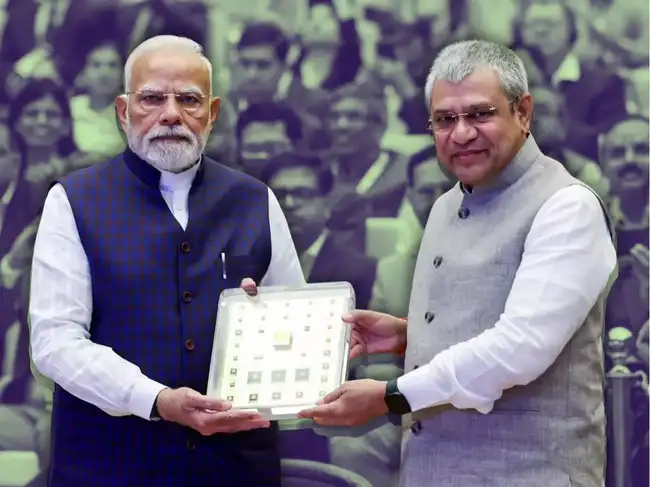
India’s first entirely domestic 32-bit microprocessor, the ISRO-developed Vikram-32, was unveiled at Semicon India 2025, marking a significant advancement in chip sovereignty and showcasing the progress of semiconductor in India. Minister Ashwini Vaishnaw presented the achievement of this Made-in-India design and fabrication milestone to Prime Minister Modi.
Highlighting the nation’s growing role in the global technology landscape, Prime Minister Modi emphasized India’s ambition to secure a substantial share of the projected $1 trillion global semiconductor market. This vision underscores how semiconductor in India is set to play a crucial role in strengthening domestic capabilities while ensuring a secure entry into the global supply chain.
What is a Semiconductor ?
A semiconductor is a unique class of material whose electrical conductivity falls between that of an insulator, such as glass, and a conductor, such as copper. Silicon, the most widely used semiconductor material, can have its characteristics changed by doping it with trace amounts of other elements. Semiconductors are the basis of contemporary electronics because of their capacity to regulate conductivity. Semiconductors are the building blocks of transistors, diodes, and integrated circuits because they can be made to either permit or block current depending on the situation, unlike pure conductors that always permit current to flow.
| Pros of Semiconductors | Cons of Semiconductors |
|---|---|
| Miniaturization: Enable small, powerful, and portable devices like smartphones, laptops, and wearables. | High Manufacturing Cost: Building fabs requires billions of dollars in investment and advanced infrastructure. |
| Energy Efficiency: Consume far less power than older technologies like vacuum tubes, making devices more efficient. | Complex Supply Chain: Semiconductor production depends on rare materials and a globally dispersed supply network, making it vulnerable to disruptions. |
| High Performance: Allow ultra-fast computing, storage, and communication, essential for AI, 5G, and cloud computing. | Technological Obsolescence: Rapid innovation means today’s chips become outdated quickly, requiring constant R&D. |
| Versatility: Used across industries—electronics, healthcare, defense, automotive (EVs), and space technology. | Environmental Concerns: Fabrication consumes large amounts of water, energy, and chemicals, raising sustainability issues. |
| Scalability: Support mass production, bringing down costs per unit and making technology widely accessible. | Skilled Workforce Gap: Requires highly specialized engineers and technicians, which many countries, including India, are still developing. |
| Strategic Value: Considered “digital gold” or “digital oil” of the 21st century, vital for national security and economic strength. | Geopolitical Risks: Concentration of fabs in regions like Taiwan makes global supply chains sensitive to conflicts and trade wars. |
Value of Semiconductor
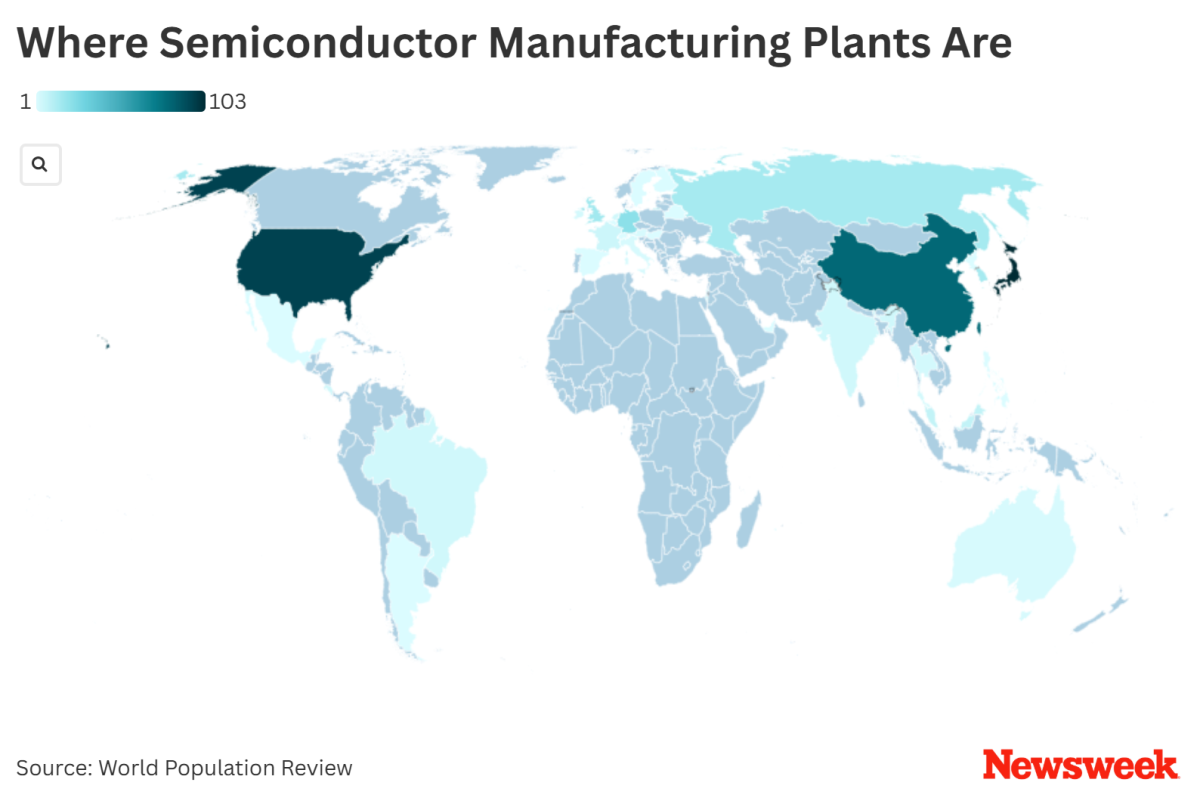
Semiconductors carry enormous economic and strategic value. Globally, the semiconductor industry surpassed $600 billion in 2022 and is projected to reach $1 trillion by 2030, driven by automation, digital adoption, and the growing use of electronics in every sphere of life. The market for semiconductor in India is particularly promising, valued at around $38 billion in 2023 and expected to grow to $54 billion by 2025. This rapid rise highlights the importance of the semiconductor industry in India as both an economic engine and a strategic priority.
Beyond market size, semiconductor in India plays a crucial role in ensuring supply chain resilience, advancing technological leadership, and strengthening national security. To reduce import dependence and secure a position in the global technology race, India is making massive investments in semiconductor research, design, and manufacturing, ensuring that the semiconductor in India becomes central to the nation’s long-term growth.
Usages of Semiconductor
The usages of semiconductors cover nearly every part of modern life, making them vital to the digital world. From smartphones, laptops, and 5G networks to electric vehicles, medical devices, and renewable energy systems, semiconductors power innovation across industries. With growing demand, the role of semiconductor in India is becoming crucial for technology, economic growth, and global competitiveness.
SEMICON 2025
It appears that 2025 will mark a sea change in the semiconductor industry in India. For decades, India has been recognized as a global hub for IT services and software development, yet the semiconductor industry in India has largely depended on imports for advanced hardware and chips. Today, however, the nation is taking bold steps to position itself as a leading force in the global semiconductor industry. With strong government policies, rising foreign investments, and rapid domestic innovation, the semiconductor industry in India is set to reduce reliance on external vendors while strengthening its role in the world’s fast-growing digital economy.
India’s drive for independence is at the core of the transformation in the semiconductor industry in India. The launch of the Vikram-32, the nation’s first fully domestic microprocessor in 2025, showcased India’s growing strength in chip innovation. This milestone highlighted the country’s ability to design and manufacture semiconductors locally, reducing dependence on imports. It also aligns with the broader objectives of the India Semiconductor Mission, which supports the semiconductor in India through infrastructure development, subsidies, and policy frameworks for fabrication, assembly, and testing. These initiatives reflect a strong national commitment to building a robust domestic manufacturing ecosystem while enhancing design expertise—an area where India already contributes nearly 20% of the world’s semiconductor design engineers.
The semiconductor market in India and the broader semiconductor industry in India have been expanding at a remarkable pace. Valued at nearly $38 billion in 2023, the market is projected to cross $50 billion by 2025, making semiconductor in India a key driver of technological and economic growth. Rapid adoption of the Internet of Things, cloud computing, electric vehicles, 5G networks, and advanced consumer electronics is fueling this surge.
As demand rises for semiconductors—ranging from memory chips and processors to sensors and power devices—the semiconductor industry in India is witnessing unprecedented momentum. To tap into this growth, global giants such as Foxconn, Micron, and Tata Electronics are investing billions in fabrication plants, testing facilities, and research partnerships across states like Assam, Tamil Nadu, and Gujarat, further cementing the importance of semiconductor in India to the global supply chain.
The convergence of local and global priorities is what makes 2025 a landmark year for the semiconductor in India story. As the pandemic exposed the vulnerabilities of overdependence on a few nations for chip production, countries worldwide have diversified their sourcing strategies. In this global realignment, India has emerged as a logical partner, with the semiconductor industry in India offering strong advantages such as a vast talent pool, supportive policy incentives, and a rapidly expanding consumer market. Strategic alliances, including the India–US Initiative on Critical and Emerging Technologies (iCET), are further strengthening India’s role in cooperative research, technology transfer, and workforce development. Together, these efforts highlight how the semiconductor in India is becoming central to global supply chain resilience and innovation.
Notwithstanding these successes, challenges remain for the growth of semiconductor in India. The production of semiconductors is highly capital-intensive, requiring advanced technology, specialized skills, and a reliable power supply. To realize its full potential, the semiconductor industry in India must address obstacles such as dependable infrastructure, overcoming talent shortages in hardware engineering, and building a skilled workforce for fabrication plants. Still, the momentum of 2025 shows that the foundation for semiconductor in India is being firmly laid. With multibillion-dollar factories, domestic R&D innovations, and strong policy support, the vision of India as a global semiconductor hub is rapidly taking shape.
Essentially, 2025 represents the beginning of a new era for semiconductor in India, rather than just another year of progress. India is evolving from being only a link in the global semiconductor design chain to becoming a central hub for innovation and manufacturing. The semiconductor industry in India holds the potential to transform the nation’s technological landscape and strengthen its role in the global economy. With the right balance of investment, talent development, and international collaborations, the vision for semiconductor in India as a global leader is quickly becoming a reality.
In conclusion, Semicon 2025 is not just a milestone but also a launchpad for the future of semiconductor in India. The nation is laying a strong foundation for manufacturing, innovation, and strategic autonomy, moving beyond its earlier role in chip design. To realize the vision of becoming a global powerhouse, the semiconductor industry in India must continue to attract investment, strengthen skill development, encourage international cooperation, and build robust infrastructure. With clear vision and unwavering dedication, the story of semiconductor in India has the potential to redefine the country’s position in the global technology landscape.
What do you think how far will this initiative be successful for India ?
Also Read : https://oasisstudy.space/india-us-relation-a-brief-exploration/
Link for Semicon India : https://youtu.be/3yjVGYCJk78






Leave a Reply